South Korea is often portrayed as a collectivistic country due to its history with Confucianism, struggles to the surprise of many with issues surrounding the elderly who live alone; in Korean, this phenomenon is referred to as Tokkŏ noin — 독거노인. Rapidly changing family structure
and Korea’s ageing society make this a common occurrence in many parts of Korea. The number of elderly people living alone nearly tripled in 2014, accumulating to roughly 1 out of 5 elderly people living alone.2
Elderly living alone brings many concerns regarding the social problems these senior citizens face due to exposure to certain risks. They are more likely to be isolated from their family and society. Through this and elderly age, it becomes increasingly difficult to live independently. Additionally, the elderly who live alone have been shown to distance themselves further from social lives and grow increasingly isolated. All of this contributes to societal issues surrounding the death of these individuals. One growing occurrence is that of the Godoksa- 고독사, which refers to an elderly person who passed
away but remains undiscovered for an extended period. This issue can be related to isolation from society and family. Another issue not to be overlooked is the suicide rates of the elderly, which are among the highest in South Korean society and OECD countries; 58.6 per 100,000.
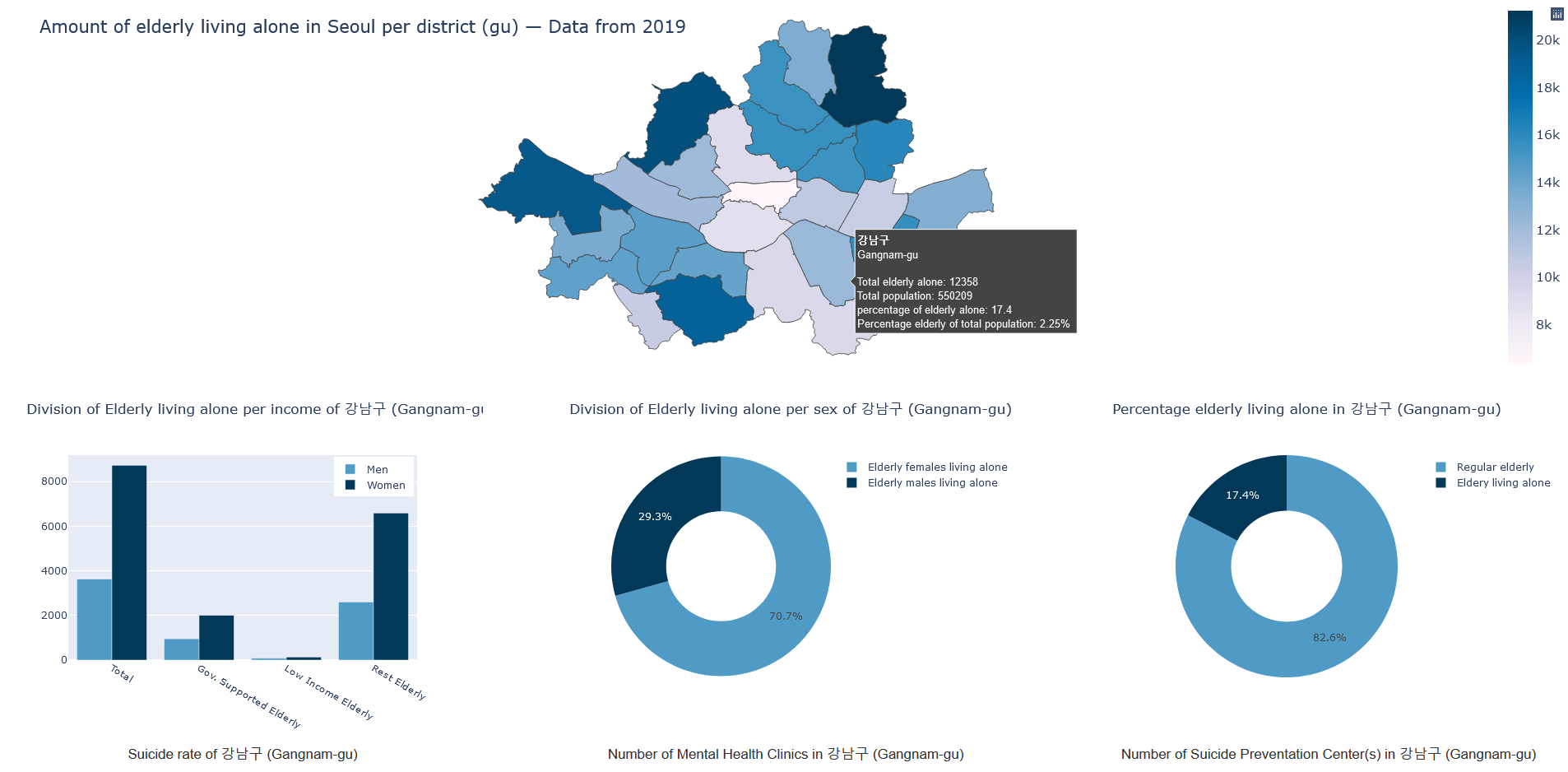
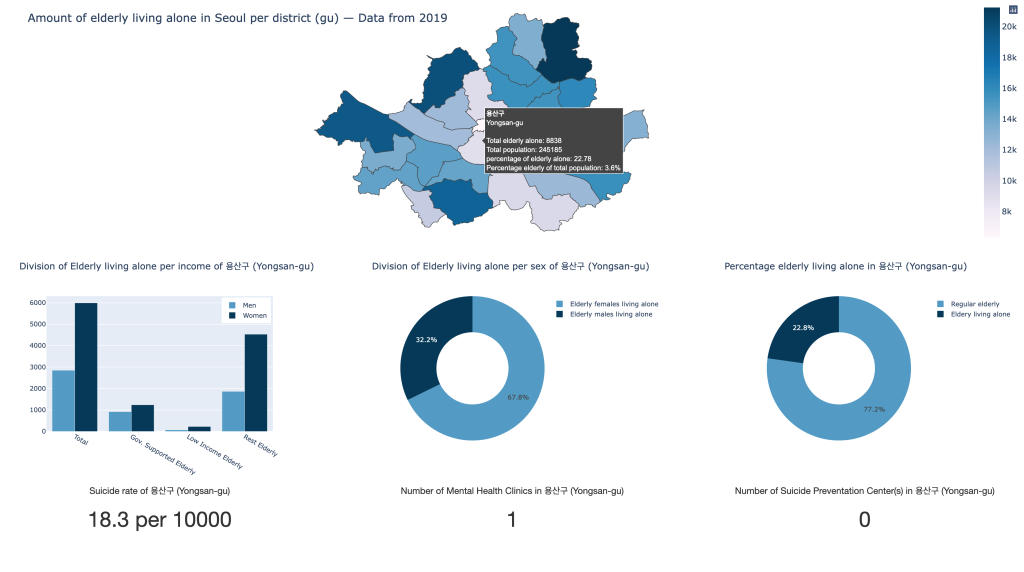
This project aims to map various datasets about the elderly living alone in Seoul to find where governmental resources can be best allocated. We thus intend to answer the question: Where can the government’s resources be best allocated in Seoul? To answer this, the student created an interactive dashboard using the datasets the Seoul government provided, allowing us to explore the datasets and suggest where to allocate resources best.
The visualization was built using Python, which was learned throughout the DH minor.
You can interact with the website here.
